Systems Integration
Connect your tools.Cut the double handling.
Connect your CRM, accounting, bookings and payments so your team spends less time copying between them. We map what needs to move, build the connections and monitor for problems.
Start with the systems your team already uses and the information people copy between them.
Not three. Enter it once and it turns up everywhere it is needed, without anyone copying it across.
Data moving without anyone pressing a button.
You own every connection we build, the accounts they run on, and the documentation. Leaving costs you nothing.
MYOB, Xero, QuickBooks, HubSpot, Salesforce, Pipedrive, Tyro, Square, Shopify.
If it has an API we can almost certainly connect it. If it does not, we will tell you that too.
Capabilities
We turn a pile of tools into one system
One person owns the whole path
A quote does not live in the CRM or the accounting package. It lives across both, plus the inbox and whatever tracks jobs. We map the whole path before touching anything.
- Every tool listed, and what it holds
- The handoffs where data gets retyped
- What breaks when someone is on leave
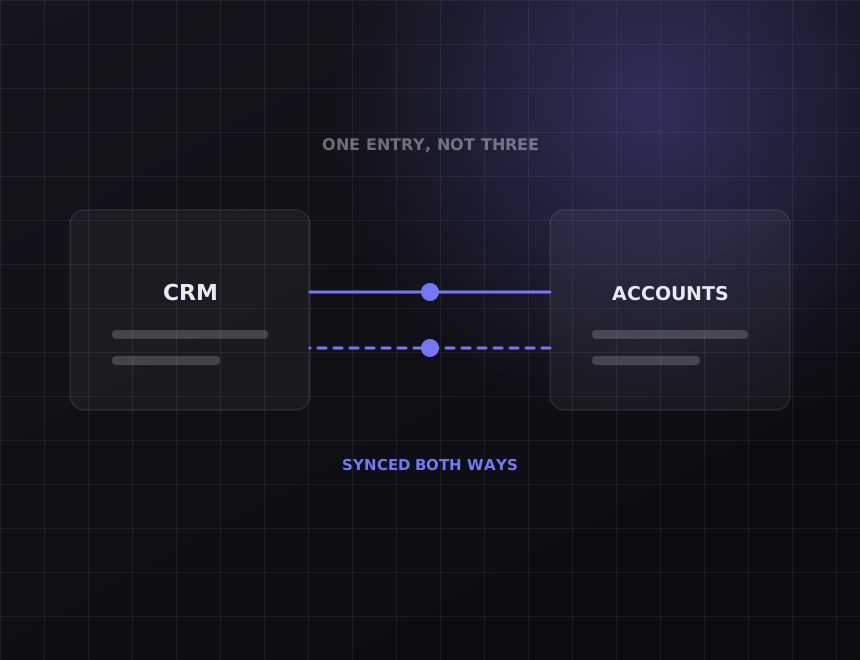
One number, not four versions of it
When four systems each hold a slightly different customer record, every report is a negotiation. We name the source of truth for each field and make the rest follow it.
- A named source of truth per field
- Duplicates matched rather than stacked
- Reporting that does not depend on who ran it
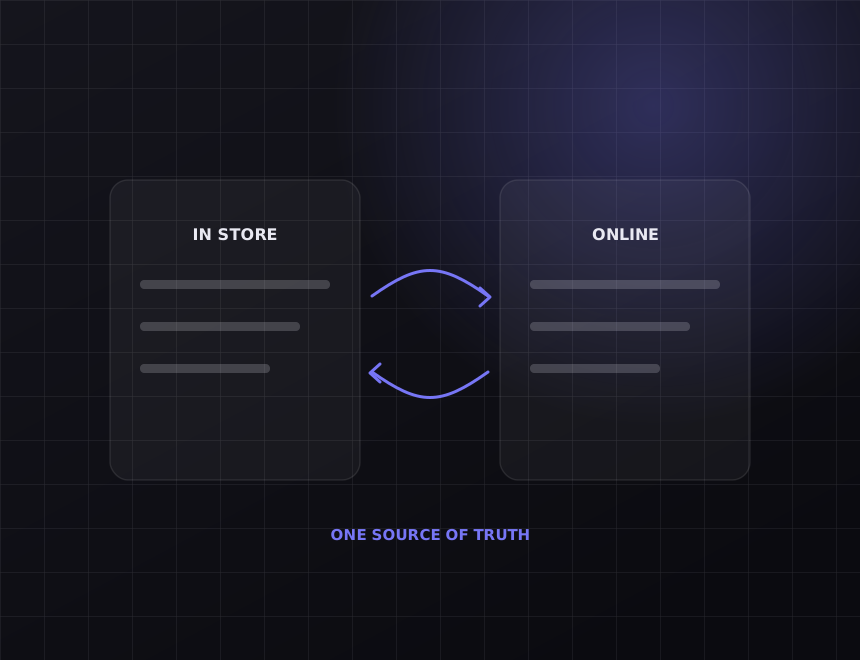
What happens on a bad day
Integrations that only work on tidy data are the ones that quietly stop and nobody notices for a fortnight. We build the failure cases first.
- Retries and queues, so a blip is not data loss
- Alerts that come to us as well as you
- A record of what moved, so you can check
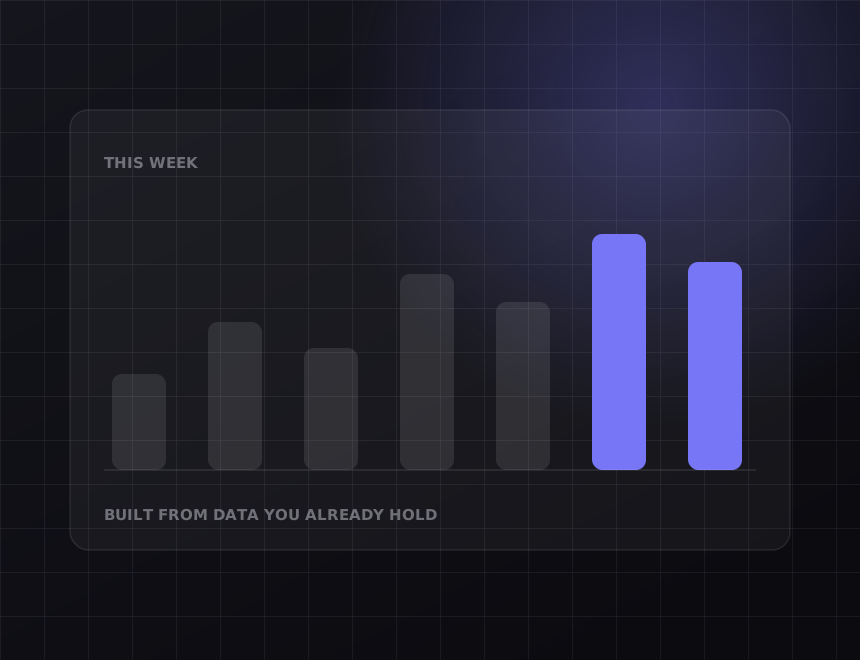
The biggest hours first
Nobody should wait three months to see whether this works. We rank connections by hours recovered and ship in that order, so the first is usually live in week one.
- Ranked by hours, not by interest
- Each stage useful on its own
- Stop after any stage and keep what is built

What We Connect Read our guide to connecting POS, Xero and bookings for a practical starting point.
Enter it once. Keep your systems in sync.
When your CRM doesn't talk to your accounting software, someone enters the same data twice. Your POS and inventory don't sync, so stock gets counted by hand. Nobody linked your booking system to your calendar, so appointments get copied across manually.
We build the integrations that eliminate all of it. Whether it's a simple two-way sync or a complex multi-platform data pipeline, we connect it and keep it running. The nine pairs we build most often, with prices, are on the integrations page, and our guide to connecting POS, Xero and bookings is a practical starting point.
- API integration between any two platforms
- Payment gateway setup: Stripe, Tyro, Square
- CRM and accounting software connections (Xero, MYOB)
- POS and inventory system sync
- Booking and scheduling platform integration
- Ongoing technical support retainers
- System health monitoring and alerts

Case Study
Cycle Station: POS, bookings and Tyro payments, all connected.
Cycle Station needed their POS, online booking system, and Tyro payment terminals working together across multiple store locations. We set up and connected the POS, online bookings and Tyro terminals, and still manage them on a cancellable support retainer.
How it works
What we actually do, in the order we do it.
Most integration work is live within two to four weeks. It is the fastest thing on our list to pay for itself, because you can usually count the hours it gives back on the first day.
1. Map what you run, and where it breaks
Every tool, every place data gets entered twice, and every point where somebody is carrying information between two systems by hand. This part usually takes an afternoon and surprises people.
2. Pick the join, not the tool
Some of this is a Zapier job. Some needs Make or n8n. Some needs a proper API connector because the volume or the error handling matters. We choose per problem rather than per favourite.
3. Build it, then try to break it
Connections get built with the failure cases handled: what happens on a duplicate, on a timeout, on a record missing a field. Integrations that only work on tidy data are the ones you find out about at the worst possible moment.
4. Monitoring, so you find out before your customer does
Health checks and alerts on every connection. If something stops, we know, and in most cases it is fixed before anyone in your office notices.
What it costs
Real numbers, before you ask for a quote.
Integration work starts from $2,500 for a straightforward two-system sync and runs to $12,000+ where there are several platforms, high volume, or data that has to be reconciled rather than copied. Ongoing monitoring is optional.
Why this one usually pays for itself first
It is the cheapest thing on our list and it removes work that happens every single day. If two people are each losing forty minutes a day to retyping, the sums are not subtle.
What we will not do
Bolt an integration onto a process that should be scrapped. Sometimes the honest answer is that the second system should not exist, and automating the join just makes a bad arrangement permanent.
Who owns it
You do. The connections live in your accounts, on your subscriptions, and you can take over running them whenever you want.
FAQs
Questions about
systems integration.
How much does an integration cost?
From $2,500 for a straightforward two-system sync. Larger jobs with several platforms or high volume run to $12,000+. You get an exact figure on your audit call.
Which tools can you connect?
Xero, MYOB, Stripe, Tyro, Square, Shopify, HubSpot, Pipedrive, most booking platforms and most POS systems. Anything with an API, essentially, and where there is no official API we can often build a connector. The pairs we build most often each have their own page under integrations.
How long does it take?
Most integration work is live within two to four weeks. Simple two-system syncs are often quicker than that.
What happens when an integration breaks?
We put health checks and alerts on every connection we build, so we find out rather than you. Ongoing monitoring is available as a retainer, and it is cancellable.
The other half
Connecting your tools does not bring you new customers.
Integration gives you hours back. It does not make the phone ring. If enquiries are the actual problem, the work is on the other side of the business: see SEO and web design. On the call we will tell you which half is costing you more.
Tired of your tools not talking to each other?
Thirty minutes. Tell us what you run and we will map exactly what connects to what, what it takes, and what it costs. You keep the map whether or not you use us.
Get my free audit →Prefer to pick a time? Book a 30 minute call.